What Is a Shear Baler and How Does It Work in Scrap Metal Recycling
26 June, 2026


Waste metal recycling has become an essential part of modern industrial manufacturing, and briquette machines are one of the most effective pieces of equipment used to process metal chips and turn them into dense, high-value briquettes. At AUPWIT, we specialize in metal briquetting solutions that help manufacturers reduce waste volume, improve furnace efficiency, and achieve cleaner and more economical workshop operations.
This article provides a professional, human-written explanation of how a briquette machine works, specifically in the context of metal scrap and metal chip recycling, covering the complete process from raw material handling to final briquette formation.
Metalworking operations—such as CNC machining, milling, turning, drilling, and stamping—generate large amounts of loose metal chips, including:
Aluminum chips
Steel and iron chips
Stainless steel swarf
Copper and brass chips
Mixed alloy scrap
These chips typically have low density, large volume, high oil content, and poor storage efficiency. Transporting them is costly, and melting loose chips directly results in metal loss and poor furnace performance.
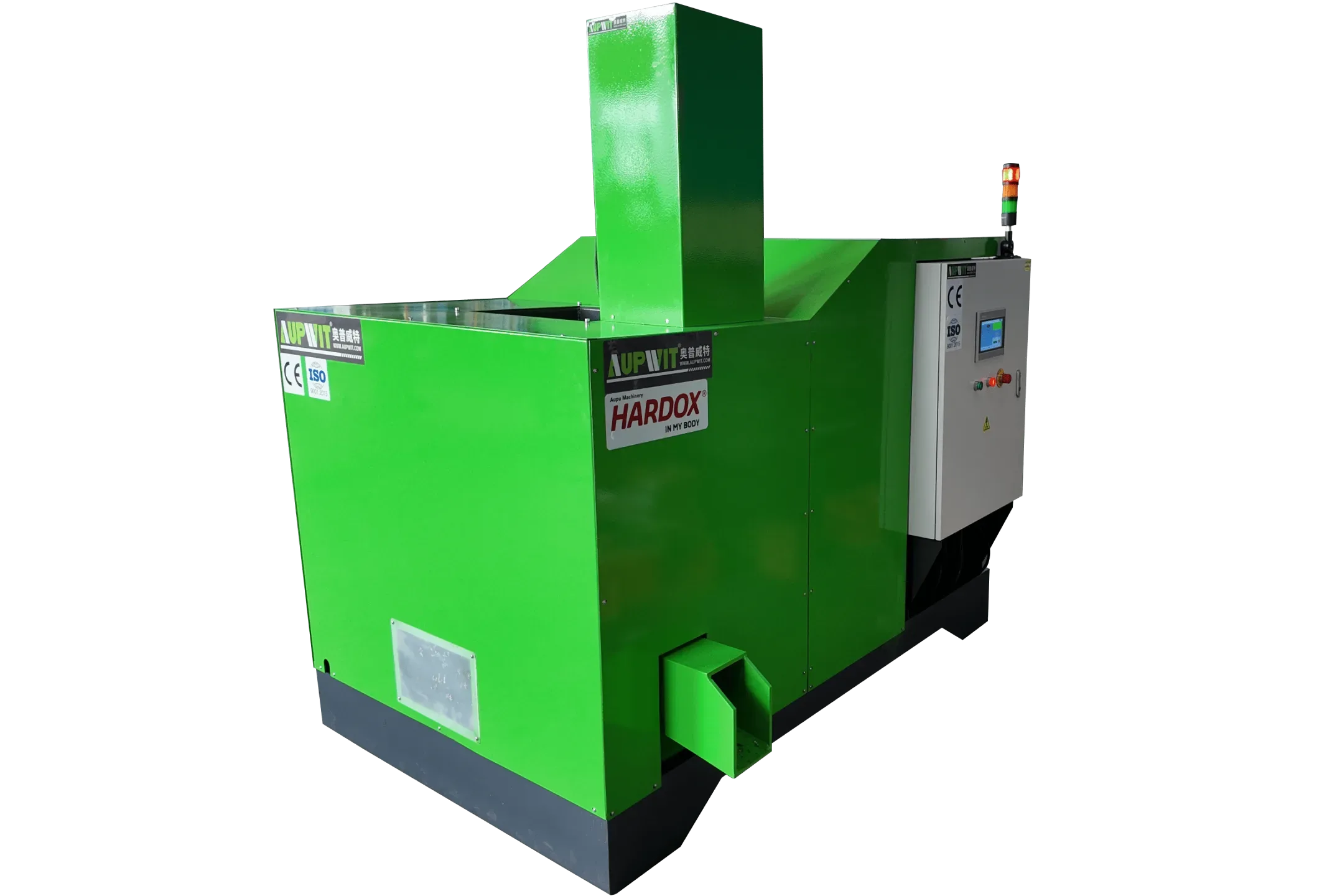
A metal briquette machine solves these problems by compressing loose chips into dense, clean, and easy-to-handle metal briquettes. These briquettes reduce storage volume by up to 90%, improve melting efficiency, and significantly increase recycling value.
AUPWIT’s metal briquetting equipment is widely used in machining workshops, aluminum plants, steel factories, copper processing facilities, and scrap metal recycling centers.
Step-by-Step Working Process
While different machines may vary in size or hydraulic configuration, the working principle of metal briquetting is generally the same. Below is a detailed explanation of each stage.
Before entering the machine, metal chips must be prepared to ensure stable and high-density briquettes.
• Suitable Chip Size
Chips should ideally be between 3–20 mm. Long, curled turning chips often require crushing to avoid blocking the chamber or causing uneven compression.
• Controlled Oil Content
Machining chips usually carry cutting oil or coolant. Excessive oil can lead to soft briquettes or contamination.
If necessary, the chips are pre-treated using:
Oil centrifuges
Chip wringers
Dehydration equipment
This reduces oil content, protects the machine, and improves briquette quality.
• Dry and Clean Condition
Dry chips produce stronger, more stable briquettes. Moisture or contaminated chips may reduce density and cause corrosion.
Prepared metal chips are fed into the machine through:
Screw conveyors
Belt conveyors
Hopper gravity feeding
Automatic metering systems
A constant and uniform feeding rate is essential. Uneven feeding leads to unstable briquette density or incomplete compaction.
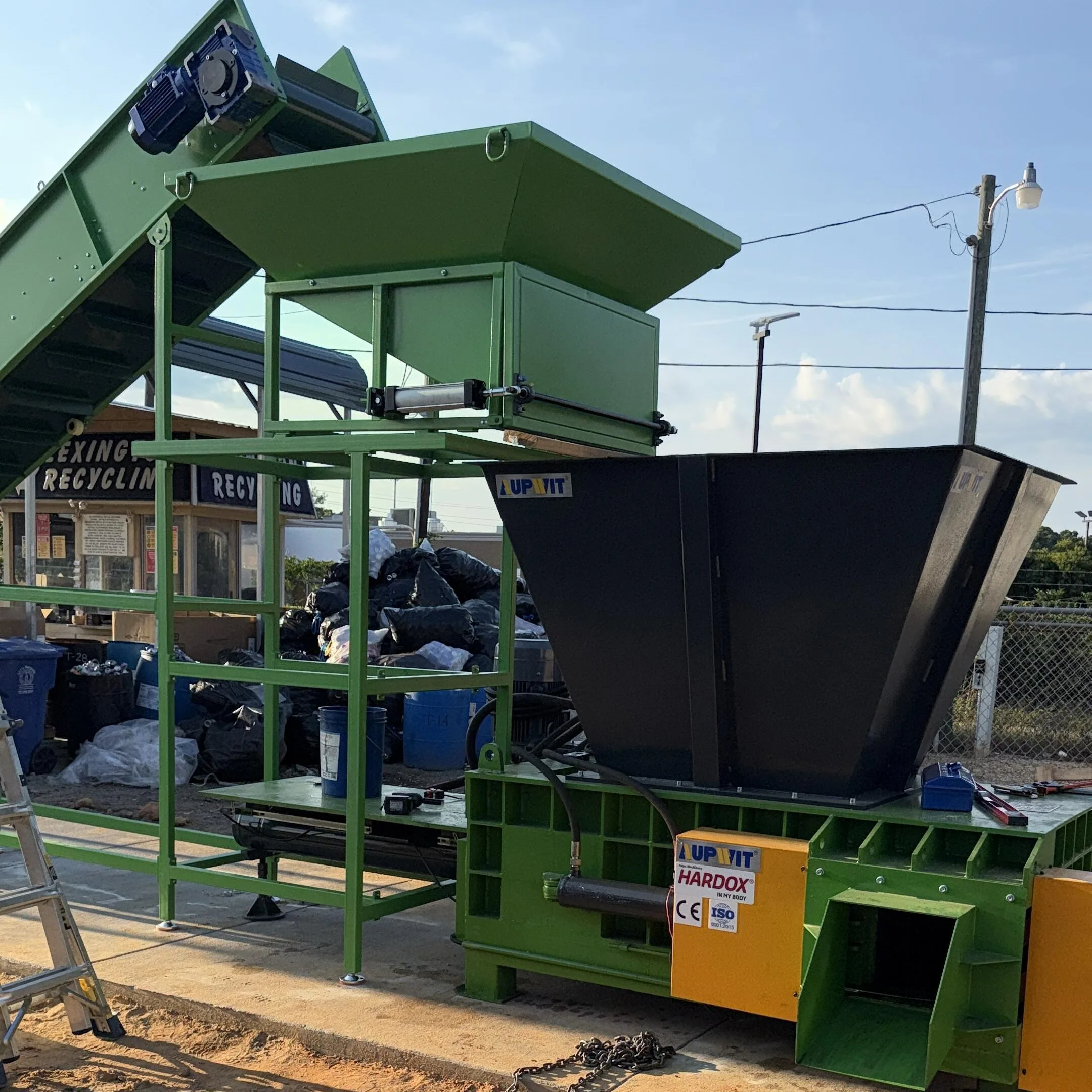
AUPWIT feeding systems are engineered for smooth, continuous operation to maximize productivity.
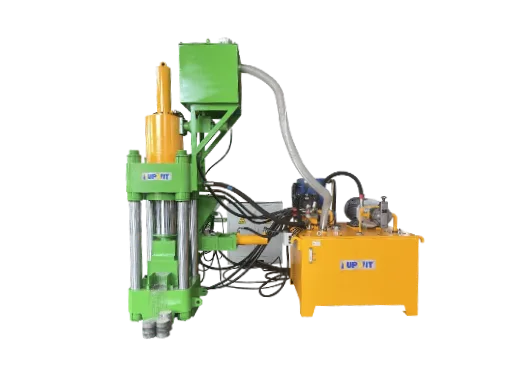
The heart of any metal briquette machine is its hydraulic system, which generates extremely high and stable pressure. During the compression phase:
The hydraulic cylinder pushes a ram (piston) forward
Metal chips are compacted inside the chamber
Air gaps between chips are removed
Excess cutting fluid is squeezed out
Metal particles bind tightly under high pressure
Compression pressures often range from:
100 – 300 MPa
(depending on machine size and metal type)
This strong and consistent force transforms loose chips into dense, solid briquettes suitable for melting and handling.
AUPWIT’s hydraulic systems are known for durability, stability, and high-pressure capability, ensuring strong and uniform briquette formation.
When sufficient pressure is applied, the material forms into a compact briquette. The shape depends on the mold or die, commonly:
Round briquettes
Square blocks
Rectangular slabs
Good forming results in briquettes that are:
Smooth and uniform
High density
Strong and resistant to breakage
Low in oil content
These characteristics greatly enhance furnace performance and metal recovery rates.
After compression and forming, the machine automatically ejects the briquette:
Onto a discharge chute
Onto a conveyor
Into a collection bin
Or into a packaging system
AUPWIT briquette machines can be integrated with automated collection and conveying systems for continuous production.
Unlike biomass or charcoal briquettes, metal briquettes do not require drying or cooling. They can be:
Immediately stacked
Stored on pallets
Sent directly to smelting operations
Sold to scrap processors
Because of their high density, metal briquettes significantly reduce storage space and transportation costs.
Several factors determine the strength, density, and uniformity of the final briquettes:
1. Pressure Level and Stability
Higher and more stable pressure yields denser briquettes.
2. Chip Oil Content
Too much oil prevents proper compaction and reduces briquette strength.
3. Chip Type and Composition
Different metals compress differently; aluminum, steel, and copper require different pressures.
4. Mold Accuracy and Wear Resistance
Precise molds ensure uniform shape and density.
5. Feeding Consistency
Uniform feeding prevents density fluctuations and ensures smooth operation.
Metal briquette machines are widely used in:
CNC machining centers
Aluminum and steel processing plants
Copper and brass machining workshops
Metal scrap recycling facilities
Foundries and smelting operations
By compressing metal chips into dense briquettes, companies significantly reduce waste volume, improve recycling efficiency, and boost profitability.
1. Up to 90% Volume Reduction
Loose chips become compact blocks, saving storage and floor space.
2. Improved Melting Efficiency
Dense briquettes melt faster and reduce oxidation loss.
3. Cutting Oil Recovery
Squeezed oil can be collected and reused, reducing costs.
4. Lower Transportation Expenses
Briquettes are easier and cheaper to transport.
5. Cleaner and Safer Workshop Environment
Less dust, less spillage, and fewer operational hazards.
For industries dealing with metal chip waste, understanding how a briquette machine works is key to improving overall efficiency. From material preparation to hydraulic compression and final forming, each step affects productivity, briquette density, and recycling value.
With the right equipment—such as AUPWIT’s high-pressure metal briquette machines—manufacturers can reduce waste handling costs, enhance melting performance, recover valuable coolants, and achieve cleaner, more sustainable operations.