What Is a Shear Baler and How Does It Work in Scrap Metal Recycling
26 June, 2026


In modern manufacturing industries, large volumes of metal scrap such as aluminum chips, steel turnings, cast iron filings, and copper waste are generated every day. If not handled properly, these loose materials not only occupy valuable storage space but also result in material loss and increased transportation costs.
A metal briquetting machine provides an efficient solution by compressing loose scrap into high-density briquettes. However, choosing the right machine requires more than just checking specifications. It involves a clear understanding of material characteristics, production goals, and long-term operational efficiency.
Not all metal scrap behaves the same during the briquetting process. This is the first factor that directly determines the machine configuration.
Common materials include:
Aluminum chips (lightweight, easy to compress)
Steel and iron turnings (high hardness, require stronger pressure)
Copper scrap (high value, requires clean and dense briquettes)
Mixed metal waste (requires pre-sorting or special design)
Different metals have different compressibility and rebound characteristics. For example, aluminum chips can be compacted at relatively lower pressure, while steel or cast iron requires high-pressure hydraulic systems.
Choosing a machine without matching your material type can result in poor briquette density or excessive wear on components.
For metal recycling, the density of the final briquette is critical. Higher density means:
Reduced storage space
Lower transportation cost
Higher furnace efficiency during remelting
Better recovery of cutting fluids
A high-quality metal briquetting machine typically uses a hydraulic system capable of generating strong and stable pressure. When evaluating equipment, pay attention to:
Maximum system pressure
Briquette density (kg/m³)
Oil recovery capability
For industries like machining or die casting, recovering coolant or cutting oil from metal chips can significantly improve overall economic returns.
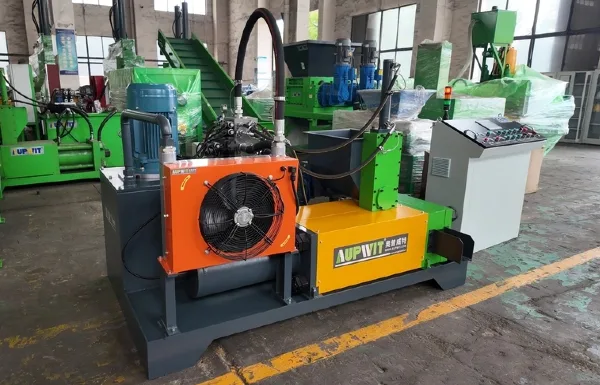
Production capacity should match your scrap generation rate. If the machine capacity is too low, scrap will accumulate quickly. If it is too high, the investment may not be fully utilized.
Key considerations include:
Hourly output (kg/h or tons/h)
Continuous vs batch operation
Feeding system (manual or automatic)
For large-scale factories, fully automatic systems with conveyors and crushers are often preferred to reduce labor costs and improve workflow efficiency.
Metal briquetting is a high-load process, especially when dealing with hard materials like steel or cast iron. Therefore, machine durability is a major concern.
Important structural factors include:
Frame strength and welding quality
Hydraulic cylinder performance
Wear resistance of molds and pressing chambers
Stability during continuous operation
A robust machine design ensures long service life and minimizes downtime, which is crucial for industrial users.
Automation is becoming increasingly important in modern metal recycling systems. A well-designed control system can significantly improve productivity and reduce operator dependency.
Look for features such as:
PLC control with touchscreen interface
Automatic pressure adjustment
Fault diagnosis and alarm system
Integration with upstream and downstream equipment
For large manufacturing plants, automated briquetting systems can be seamlessly integrated into existing production lines.
One unique advantage of metal briquetting is the ability to recover cutting fluids and coolants trapped in metal chips.
A good briquetting machine should:
Efficiently separate oil from metal scrap
Collect and recycle fluids for reuse
Reduce environmental contamination
This feature is especially valuable in CNC machining workshops, where coolant costs and environmental compliance are major concerns.
Metal briquetting machines are often part of a larger recycling system that may include:
Metal crushers or shredders
Chip conveyors
Storage bins
Fluid collection systems
Before purchasing, it is important to evaluate:
Available floor space
Equipment layout
Material flow design
A well-integrated system improves operational efficiency and reduces manual handling.
Since metal briquetting machines operate under high pressure, regular maintenance is unavoidable. Choosing equipment with easy maintenance access can save significant time and cost.
Consider:
Availability of spare parts
Ease of replacing wear components
Hydraulic system maintenance requirements
Technical support from the supplier
Reliable after-sales service is essential to ensure uninterrupted production.
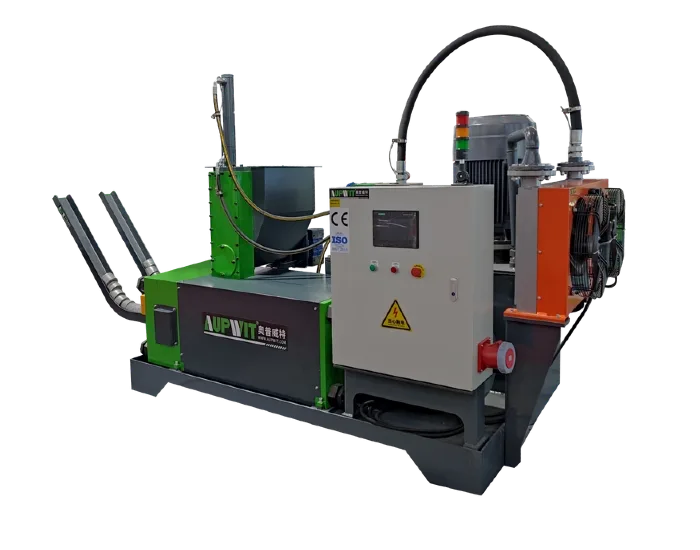
Energy efficiency plays a crucial role in long-term profitability. Hydraulic briquetting machines, in particular, can consume significant power if not properly designed.
When evaluating machines, check:
Power consumption per ton of output
Motor and hydraulic efficiency
Idle energy consumption
An energy-efficient system not only reduces costs but also aligns with sustainability goals.
Beyond the machine itself, the supplier’s experience and technical capability are equally important.
A professional manufacturer should be able to:
Provide customized solutions based on your scrap type
Offer system design and layout suggestions
Support installation and commissioning
Deliver reliable after-sales service
Working with an experienced supplier ensures that your briquetting system is optimized for real-world industrial conditions.
Investing in a metal briquetting machine is not just about waste management—it is about improving resource efficiency, reducing operational costs, and increasing the value of recyclable materials.
By carefully evaluating factors such as metal type, pressure requirements, automation level, and system integration, you can select a machine that delivers consistent performance and long-term value.
If your operation involves large volumes of metal scrap, a well-designed briquetting solution can transform your production process from waste handling into a profit-generating system. For tailored recommendations and system design, it is always advisable to consult with a professional briquetting machine manufacturer who understands the specific challenges of metal recycling.
Metal briquetting machines are designed to handle a wide range of scrap materials, including aluminum chips, steel turnings, cast iron filings, copper scrap, and even some alloy materials. However, different metals require different pressure levels and machine configurations, so it is important to match the equipment to your specific material.
In most cases, no binders are required. Metal briquetting machines use high hydraulic pressure to compress scrap into dense briquettes. This is one of the key advantages compared to biomass briquetting, where binders or specific moisture levels may be necessary.
The density of metal briquettes depends on the material and machine pressure. Typically, briquettes can reach 85%–95% of the original metal density. Higher density improves melting efficiency and reduces oxidation loss during furnace processing.
Yes, most high-quality metal briquetting machines are designed to extract and recover cutting fluids or coolants during the compression process. These fluids can be collected and reused, reducing both operational costs and environmental impact.
With proper maintenance, a high-quality metal briquetting machine can operate reliably for 8–15 years or even longer. The lifespan largely depends on machine quality, material type, and maintenance practices.
Vertical machines are generally more compact and suitable for smaller operations, while horizontal machines are better for continuous, large-scale production with automated feeding systems. The choice depends on your plant layout and production volume.
In many cases, yes. Pre-processing such as crushing, shredding, or removing oversized pieces helps ensure uniform feeding and improves briquette quality. Clean and consistent material will always produce better results.
You should evaluate the supplier’s industry experience, technical support capability, customization options, and after-sales service. A reliable supplier will not only provide the machine but also help optimize your entire metal recycling process.