Aluminium China 2026
3 July, 2026


So, you’ve reached the point in your waste management or recycling operation where loose material is no longer just a nuisance—it’s a logistical and financial drain. Cardboard boxes are staging a coup in your warehouse, plastic film billows like an indoor storm, and your scrap metal is claiming more square footage than your production line. You know you need a baler. A quick search, however, presents you with a fundamental choice: the horizontal baler or the vertical baler.
This isn’t just a matter of orientation. It’s a decision that impacts your floor space, labor, output, and ultimately, your bottom line for years to come. As someone who’s walked countless factory floors and seen both heroes and headaches, let me tell you: there is no universal “best” choice. There’s only the right choice for your specific situation. Let’s cut through the sales jargon and break down this critical comparison.
To understand the difference, forget the machines for a moment. Think about making a brick.
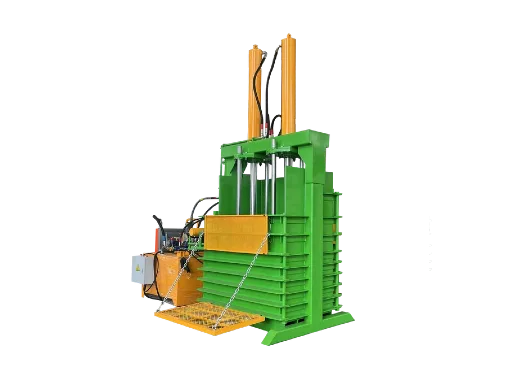
A Vertical Baler is like using a standalone trash compactor. You open the top door, fill a vertical chamber by hand or conveyor, close the door, and a hydraulic ram presses down from above to compact the material into a bale. When finished, you open a side or end door, tie the bale (often manually), and remove it. The cycle is generally batch-oriented and often manual in nature.
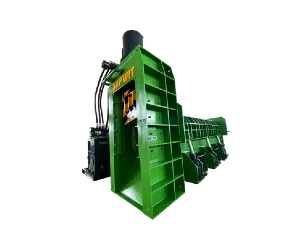
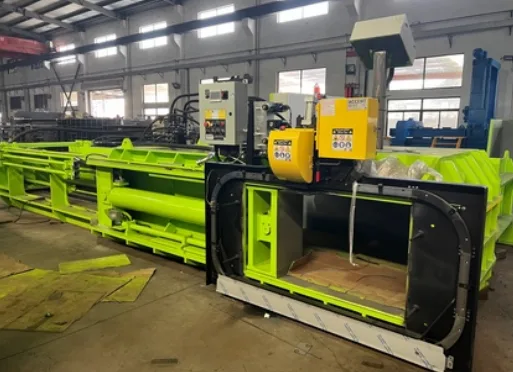
A Horizontal Baler operates more like a high-output factory press. Material is fed into a long, horizontal charging box, typically by a conveyor. A powerful hydraulic ram pushes the material horizontally through the chamber, compressing it against a previous bale or a “door.” Bales are formed, tied automatically with wires or straps, and then ejected in a continuous or semi-continuous process. Its operation is geared towards throughput and automation.
This fundamental difference in philosophy—batch vs. continuous, manual vs. automated—sets the stage for every other distinction.
The Nitty-Gritty: A Side-by-Side Breakdown
Let’s get into the weeds. Here’s what you need to evaluate.
This is often the first deal-maker or breaker.
Vertical Balers: They win on floor space. They have a smaller footprint, standing tall rather than spreading long. This makes them ideal for retail backrooms, small warehouses, or facilities where every square foot is precious. However, remember you need ample overhead clearance for the ram and loading, and enough space around them for operators to feed and remove bales.
Horizontal Balers: They demand a larger footprint length to accommodate the charging box and ram stroke. They are space-hungry in the horizontal plane. The trade-off? They often require less ceiling height than large vertical models. Their footprint is a long, low profile. You also need to plan for infeed conveyor space and outfeed bale handling.
This is where the paths diverge dramatically.
Vertical Balers: These are low to medium-capacity units. They are perfect for generating a few bales per day or per week. Think 1-5 tons of cardboard per day. The cycle time—filling, compacting, tying, ejecting—is measured in many minutes per bale. They are the reliable workhorse for consistent, moderate volumes.
Horizontal Balers: These are the high-volume champions. Designed to process multiple tons of material per hour, they are built for speed and endurance. Their continuous-feed capability (in auto-tie models) means material can be fed almost constantly, with bales being tied and ejected without stopping the main ram. If your operation generates a mountain, you need a horizontal baler to move it.
How many people can you dedicate, and what do you want them doing?
Vertical Balers: Generally more labor-intensive. Loading is often manual or requires an operator to manage a conveyor feed. The tying (wiring) process is frequently manual, requiring an operator to thread wires through channels and secure the bale. Bale ejection and removal are also manual tasks. It’s a hands-on machine.
Horizontal Balers: Engineered for labor efficiency. Conveyor-fed systems minimize manual loading. The biggest advantage is automatic tying. Programmable Logic Controllers (PLCs) control the precise timing of wire or strap tying, creating uniform, secure bales with minimal operator intervention. Ejection is often automatic, pushing the finished bale onto a waiting pallet or transfer car. One operator can often manage multiple tasks while the baler runs.
The end product matters, especially if you’re selling it.
Vertical Balers: Typically produce smaller, less dense bales. Standard sizes are often in the 500-1,200 lb range for cardboard. While acceptable, they may not achieve the “mill-grade” density that maximizes value per truckload and meets strict recycler specifications.
Horizontal Balers: Produce large, exceptionally dense, uniform bales. Bales weighing 1,000 lbs to over 2,000 lbs are common. The extreme pressure of the horizontal ram creates a tighter, more stable bale that maximizes weight per trailer, reduces freight costs, and is often more desirable (and higher-priced) at recycling mills.
The investment curve tells a story.
Vertical Balers: Have a significantly lower initial purchase price. They are the accessible entry point. The ROI is calculated on space savings, reduced hauling frequency, and modest revenue from bales. For lower-volume generators, the math works perfectly.
Horizontal Balers: Require a substantially higher capital investment. You’re not just buying a baler; you’re often investing in a system (conveyors, wire-tying, maybe a bale stacker). However, their ROI is justified by massive labor savings, drastically reduced hauling costs due to higher density, and increased revenue from premium bales. They are an asset for a serious, high-volume operation.
You generate 1 to 5 tons of recyclable material per day.
Your floor space is severely limited (think grocery stores, shopping malls, small distribution centers).
Your budget is constrained, and you need a practical solution with a fast, simple payback.
Your labor availability is flexible, and bale production is a part-time, not full-time, task.
You don’t have the infrastructure (like 3-phase power) needed for larger horizontals.
You generate 5+ tons of material per day, or have high-volume peaks.
Labor costs are a major concern, and you need to automate to free up personnel.
Bale density and quality directly impact your revenue (e.g., selling to stringent mills).
You have the physical space to accommodate the machine and its infeed/outfeed system.
You view waste management as a strategic cost center and are ready to invest in optimization.
Before you decide, do this:
Audit Your Waste: Really know your daily/weekly volume and material types.
Measure Your Space: Include all access for feeding and bale removal.
Talk to Your Recycler: What bale sizes and densities do they prefer? What’s the price difference?
Project Your Growth: Buy for where you’ll be in 5 years, not just today.
The choice between a horizontal and vertical baler is a strategic business decision. The vertical is the reliable, economical specialist for defined tasks. The horizontal is the automated, high-output system for industrial-scale material flow. By aligning the machine’s inherent philosophy with your operational reality and financial goals, you’ll find the industrial workhorse that doesn’t just make bales—it makes sense.