What Is a Shear Baler and How Does It Work in Scrap Metal Recycling
26 June, 2026


The recycling of scrap metal has become an essential practice for industries and municipalities alike. With rising demands for sustainable raw materials and stricter environmental regulations, efficient handling and processing of scrap metals are crucial. Among the many pieces of equipment used in recycling operations, the scrap metal baler stands out as a cornerstone technology.
Scrap metal balers compress bulky and irregular metal waste into dense, uniform bales that are easier to transport, store, and recycle. However, not all balers are the same. Depending on the material type, production scale, and specific recycling needs, different types of balers are available. Understanding these variations is key to selecting the right machine for a particular application.
In this article, we will explore the different types of scrap metal balers, their working principles, advantages, and suitable applications.
Before diving into the types, it is important to highlight why balers are so vital in the recycling industry:
Volume Reduction: Loose scrap is bulky and difficult to handle. Balers reduce volume by up to 80–90%.
Transportation Efficiency: Dense bales cut down on logistics costs by allowing more material per load.
Market Value: Recyclers pay higher prices for compact, uniform bales compared to loose scrap.
Environmental Benefits: Improved recycling efficiency reduces landfill usage and conserves resources.
Operational Safety: Properly compacted bales create a safer and cleaner work environment.
With these benefits in mind, let’s look at the major types of scrap metal balers.
Working Principle
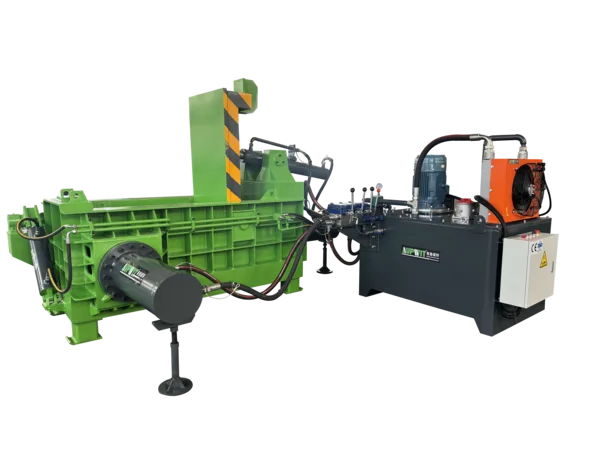
Horizontal balers feature a long chamber with a hydraulic ram that pushes scrap horizontally into a compression space. These machines are often continuous-feed, allowing materials to be loaded by conveyor, loader, or crane.
Applications
Large recycling facilities
Scrap yards with high-volume operations
Industrial manufacturers generating consistent streams of scrap
Advantages
High throughput capacity
Suitable for continuous operations
Can handle bulky materials such as sheet metal, profiles, and light steel structures
Limitations
Requires more installation space than vertical models
Higher initial investment
Working Principle
Vertical balers operate with a hydraulic ram that compresses scrap from the top down into a chamber. After compression, the bale is tied manually or automatically and ejected.
Applications
Small to medium recycling centers
Manufacturing plants with moderate scrap output
Facilities with limited floor space
Advantages
Compact footprint
Lower cost compared to horizontal balers
Easy to install and maintain
Limitations
Lower processing capacity
Best suited for lighter scrap rather than heavy steel
Working Principle
Push-out metal balers use a hydraulic system that compresses scrap within a chamber and then pushes the finished bale out through a side door. This design makes bale removal efficient and minimizes downtime between cycles.
Applications
Medium to large scrap yards
Recycling plants dealing with ferrous and non-ferrous metals
Advantages
Faster bale ejection compared to manual removal systems
Suitable for a wide variety of metals
Produces dense, uniform bales
Limitations
Larger footprint compared to single-chamber models
Higher complexity in hydraulic systems
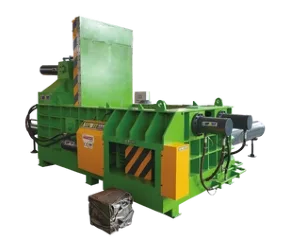
Working Principle
As the name suggests, triple-action balers compress scrap from three directions: top, side, and front. This multidirectional pressure achieves extremely dense bales with minimal spring-back.
Applications
Heavy-duty recycling operations
Facilities dealing with hard-to-compact materials such as stainless steel, copper, or aluminum alloy scrap
Advantages
Produces the highest bale density
Significantly reduces transportation and storage costs
Versatile for a wide range of ferrous and non-ferrous metals
Limitations
Larger footprint
Higher capital and maintenance costs
Working Principle
Shear balers combine the functions of shearing and baling. Scrap is first cut into manageable lengths using a hydraulic shear, then compressed into bales.
Applications
Recycling yards processing long or oversized scrap such as beams, pipes, and plates
Steel mills handling offcuts and production waste
Advantages
Dual functionality (shearing and baling) saves equipment costs
Suitable for oversized scrap
High productivity in large-scale recycling
Limitations
Higher energy consumption
Requires experienced operators
Working Principle
Portable balers are designed to be mobile, mounted on trailers or equipped with wheels. They can be transported directly to the scrap collection site.
Applications
Remote recycling projects
On-site demolition jobs
Small and medium scrap dealers who travel between collection sites
Advantages
Flexibility and mobility
Saves transportation costs by baling scrap at the source
Compact design for versatile use
Limitations
Lower processing capacity compared to stationary units
Limited in handling extremely heavy or thick scrap
Working Principle
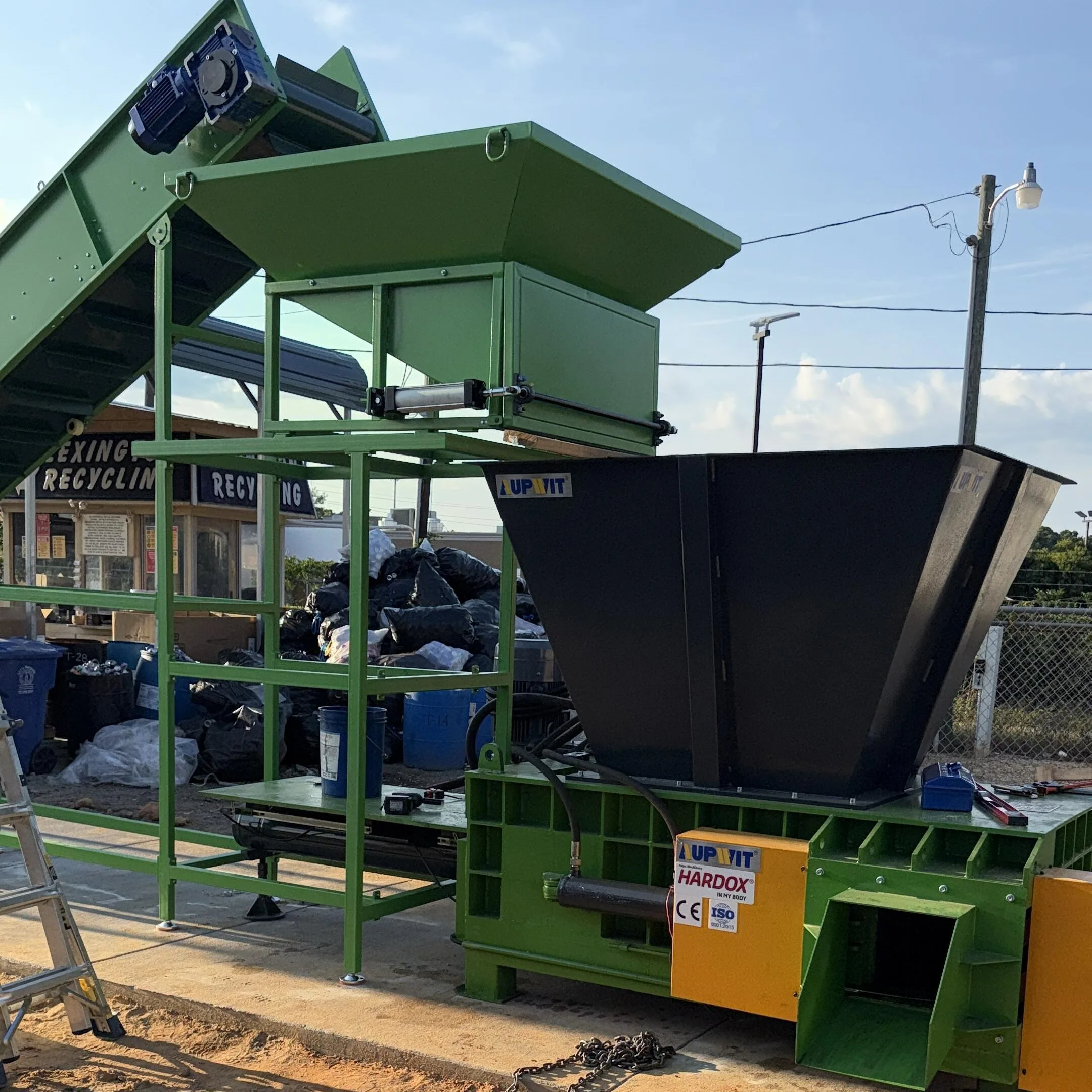
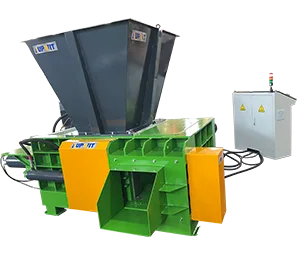
Hopper style automatic metal balers feature a large feed hopper into which scrap is continuously loaded, often by conveyor or loader. The machine automatically compresses the scrap at set intervals, reducing labor requirements and improving production efficiency.
Applications
High-volume recycling plants
Industrial facilities generating continuous streams of metal scrap
Advantages
Fully automated operation saves labor costs
Continuous feeding improves productivity
Suitable for bulk scrap of varying sizes
Limitations
Higher investment cost
Requires more space for hopper and feeding system
Choosing the Right Scrap Metal Baler
When selecting a scrap metal baler, several factors must be considered:
Type of Scrap: Light metals (aluminum, copper) may need different balers than heavy ferrous metals (steel, iron).
Production Volume: Facilities with high throughput should opt for horizontal, push-out, or triple-action balers, while smaller plants may benefit from vertical or portable models.
Available Space: Vertical balers and portable units are ideal for space-constrained environments.
Budget and Maintenance: Advanced balers with higher compaction efficiency cost more initially but may provide faster ROI through savings in transportation and higher scrap value.
Scrap metal balers are not a one-size-fits-all solution. From compact vertical models to heavy-duty triple-action, push-out, and hopper style automatic balers, each type serves a specific purpose in the recycling ecosystem. Choosing the right baler depends on factors such as material type, processing volume, available space, and budget.
By investing in the right baler, businesses can significantly improve efficiency, reduce costs, enhance workplace safety, and maximize the value of recycled scrap. In a world where sustainability and resource recovery are more important than ever, the right scrap metal baler can transform waste into opportunity.