Aluminium China 2026
3 July, 2026


In the world of metal recycling, efficiency and sustainability are the driving forces behind every technological innovation. Among the many machines used in this field, the briquette press stands out as one of the most practical and environmentally friendly solutions. It plays a vital role in transforming loose metal chips, shavings, and dust into compact, high-density briquettes, making metal recycling simpler, cleaner, and more cost-effective.
This article explores in depth how a briquette press operates, the types of materials it handles, its benefits to recycling facilities, and its broader impact on the metal recycling industry.
A briquette press, sometimes called a metal chip briquetting machine, is a piece of industrial equipment designed to compress metal residues into solid briquettes without the need for additional binders. These briquettes are easier to handle, store, transport, and melt compared to loose scrap.
Metalworking industries such as machining, turning, milling, and grinding often generate significant amounts of metal chips or fines. These loose residues take up valuable space and are difficult to manage. By using a briquette press, recyclers can convert these wastes into manageable blocks that retain high metal value and minimize losses.
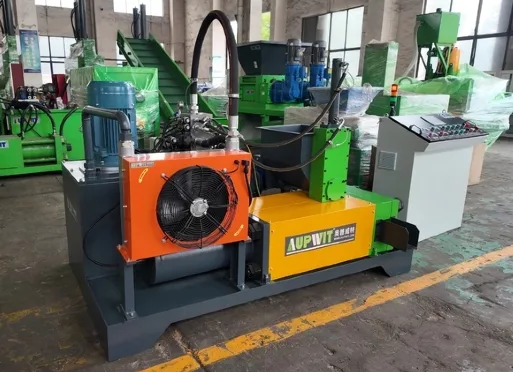
At the core of a briquette press’s operation is a hydraulic or mechanical compression system. The process can be summarized in several key steps:
Feeding the Metal Chips
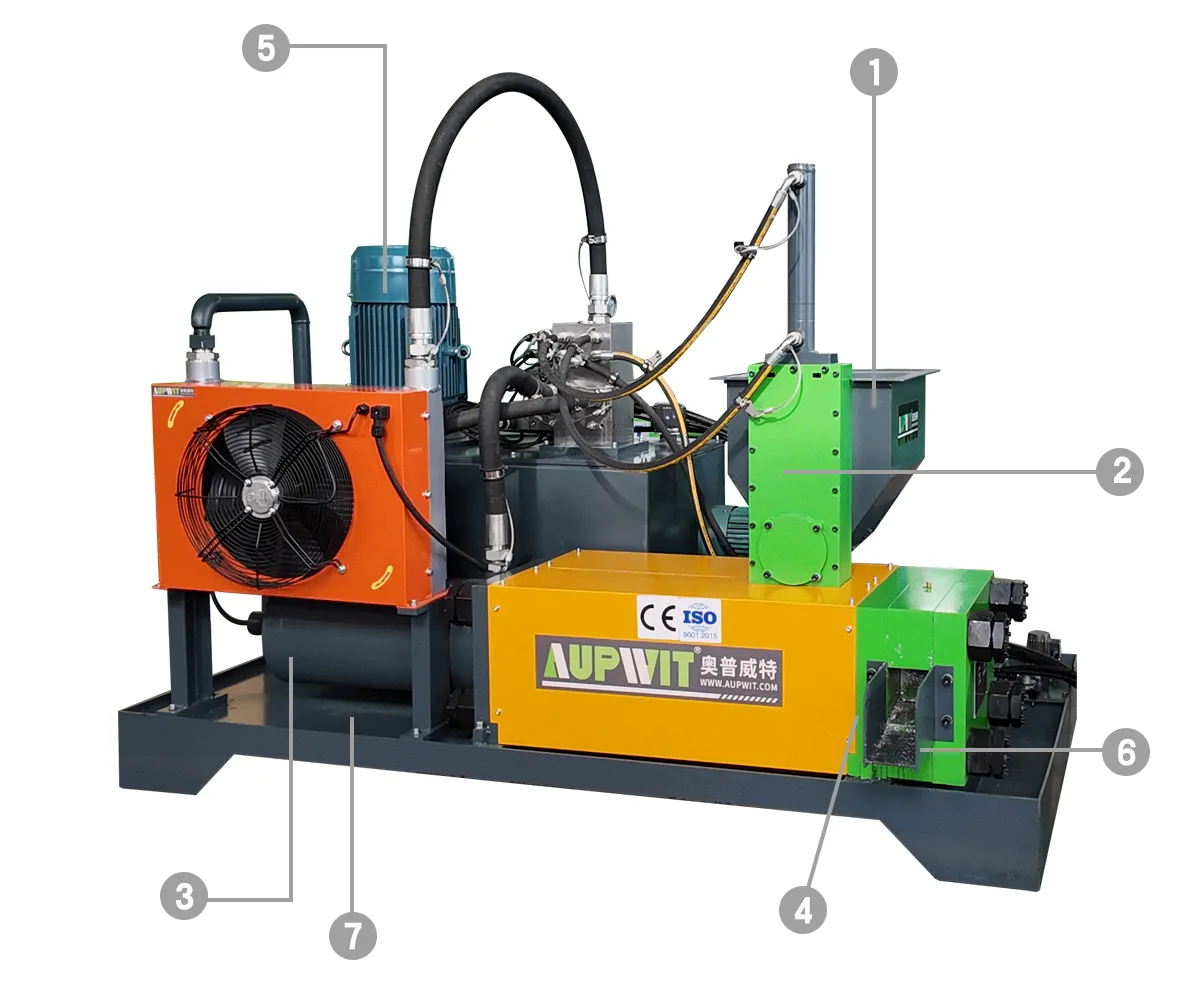
Metal residues from machining operations are first collected and fed into the hopper of the briquette press. Depending on the system, feeding can be done manually or through a conveyor for continuous operation.
Pre-Compaction
The material inside the hopper is pre-compressed to remove any air pockets and ensure uniform feeding. In hydraulic systems, this step is crucial for producing dense, high-quality briquettes.
Main Compression
Once pre-compacted, the metal chips are pressed by a powerful piston or ram inside a cylindrical or rectangular mold. The hydraulic pressure can reach several hundred bars, forcing the metal particles to bond tightly together. This creates a dense briquette with minimal voids.
Ejection of the Briquette
After compression, the formed briquette is automatically ejected from the mold. These briquettes are typically uniform in size and weight, making them easy to stack or transport.
Collection and Storage
The finished briquettes are collected at the output end of the machine and can be transferred to storage bins, pallets, or directly to the furnace for remelting.
This entire process happens automatically in modern systems, with programmable logic controllers (PLCs) managing every stage to ensure consistency and safety.
Briquette presses are versatile machines capable of handling a wide range of metallic residues. Commonly processed materials include:
Aluminum chips and turnings – from die casting or machining operations.
Steel and iron shavings – from mechanical workshops and foundries.
Copper and brass chips – from plumbing or electrical component manufacturing.
Stainless steel – from fabrication and polishing operations.
Titanium and magnesium – where recycling must meet high safety and purity standards.
Each of these metals benefits from briquetting due to reduced oxidation and improved recycling efficiency during remelting.
The operation of a briquette press provides several significant benefits for recyclers and manufacturers alike:
Loose metal chips can occupy a large volume. By compressing them into briquettes, storage requirements are drastically reduced, often by as much as 80–90%.
Briquetted metals have a higher bulk density, which enhances furnace charging efficiency. Briquettes melt faster and with less oxidation loss compared to loose scrap, leading to energy savings and improved yield.
Transporting loose chips is inefficient and messy. Briquettes, on the other hand, are compact and uniform, allowing easier handling and lower logistics costs.
Metal chips from machining often contain cutting fluids or coolants. During the briquetting process, these fluids are squeezed out and collected for reuse, reducing environmental contamination and operational costs.
By eliminating scattered metal residues and oily chips, briquetting contributes to a cleaner, safer, and more organized production environment.
Modern briquette presses are equipped with advanced automation features. PLC-based systems allow real-time monitoring of pressure, cycle time, oil temperature, and production rates. Some machines integrate with plant networks or IoT platforms for predictive maintenance and performance tracking.
Safety systems, including pressure sensors, overload protection, and automatic shutdown mechanisms, ensure reliable and safe operation even in demanding industrial environments.
Once produced, metal briquettes have multiple applications:
Direct Melting in Furnaces: Ideal for foundries and metal recycling plants.
Secondary Smelting: For alloy production or refining processes.
Resale to Scrap Dealers: Briquettes often fetch higher market prices due to their purity and ease of handling.
Internal Recycling: Manufacturers can remelt briquetted waste in-house, saving on raw material costs.
This makes the briquetting process not only a recycling method but also a profitable material recovery solution.
Sustainability has become a cornerstone of modern industry. Briquette presses directly support this goal by maximizing metal recovery, minimizing waste, and reducing energy consumption during remelting. They also help companies comply with environmental regulations by lowering emissions and preventing coolant leaks.
By turning waste into valuable resources, the briquette press demonstrates how industrial efficiency and environmental responsibility can go hand in hand.
The operation of a briquette press is a remarkable example of how engineering innovation simplifies metal recycling. By compressing loose metal waste into dense, manageable briquettes, these machines not only streamline recycling operations but also deliver tangible economic and environmental benefits.
Whether used in a small machine shop or a large-scale recycling facility, a briquette press transforms what was once waste into valuable raw material—paving the way toward a cleaner, more sustainable metal industry.