Aluminium China 2026
3 July, 2026


With the rapid growth of metal recycling and stricter environmental regulations, recycling facilities and metal processing plants are under increasing pressure to improve efficiency, safety, and consistency. Manual scrap handling and standalone balers can no longer meet the demands of high-volume operations. As a result, automatic scrap metal baler lines have become a core solution for modern recycling systems.
An automatic baler line integrates multiple processes—feeding, conveying, compaction, baling, and ejection—into a continuous and controlled workflow. By reducing manual intervention and improving system coordination, these lines significantly increase productivity while lowering operating costs.
An automatic scrap metal baler line is a complete processing system designed to handle large quantities of scrap metal with minimal human involvement. Instead of feeding material into a baler manually, scrap is transported through conveyors, sorted or buffered when necessary, and automatically compacted into high-density bales.
These systems are commonly used for steel scrap, aluminum scrap, mixed metal waste, and industrial offcuts generated in manufacturing and recycling operations. The entire process is controlled through centralized electrical and hydraulic systems, ensuring stable operation and consistent bale quality.
Conveyor feeding is the first and most critical step in an automatic baler line. Scrap metal is delivered from storage areas, shear lines, or production workshops onto belt, chain, or apron conveyors. The choice of conveyor depends on material size, weight, and flow characteristics.
Well-designed conveyor systems ensure continuous and uniform feeding, preventing overloading or material bridging. Sensors and control logic regulate feeding speed, allowing the baler to operate at optimal capacity. This not only improves throughput but also reduces wear on hydraulic components and structural parts.
Before compaction, scrap metal often passes through pre-processing stages such as magnetic separation, manual sorting, or buffer hoppers. These steps help remove non-metal contaminants and stabilize material flow into the baler chamber.
In high-capacity lines, buffer systems play a key role by storing material temporarily and feeding it evenly into the baler. This avoids frequent starts and stops, which can negatively affect equipment life and overall efficiency.
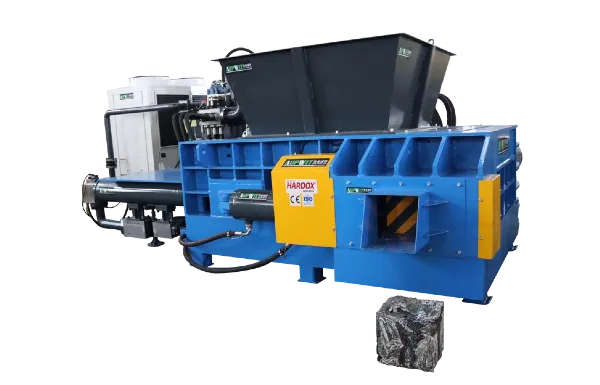
At the heart of the line is the scrap metal baler itself. Once material enters the compression chamber, hydraulic cylinders apply powerful and controlled pressure to compact the scrap into dense, uniform bales. Advanced control systems automatically adjust compression sequences based on material type and load conditions.
Compared to manual or semi-automatic balers, automatic baler lines offer more consistent bale density and shape. This consistency is critical for downstream handling, transportation, and furnace charging, especially in large recycling operations.
After the baling cycle is completed, the finished bale is automatically ejected from the baler chamber. Auto ejection systems are designed to operate smoothly and safely, reducing the need for manual handling near high-pressure equipment.
Ejected bales can be transferred to stacking areas, storage zones, or directly onto conveyors for further transport. Some systems integrate automatic weighing, labeling, or bundling, providing full traceability and easier inventory management.
Modern automatic scrap metal baler lines rely heavily on intelligent control systems. PLC-based automation allows operators to monitor system status, adjust operating parameters, and diagnose faults in real time. Touchscreen interfaces provide clear visualization of the entire production process, from feeding to ejection.
Integration with upstream and downstream equipment—such as shredders, shears, or sorting systems—creates a fully connected recycling line. This level of integration improves overall plant efficiency and supports future expansion.
One of the main advantages of automatic baler lines is labor reduction. By minimizing manual feeding and bale handling, plants can significantly reduce labor intensity and improve workplace safety.
Automation also enhances productivity and consistency. Continuous feeding and optimized baling cycles allow higher throughput with stable bale quality, which is essential for large-scale recycling operations.
From a long-term perspective, automatic baler lines reduce operating costs through improved energy efficiency, lower maintenance requirements, and extended equipment service life.
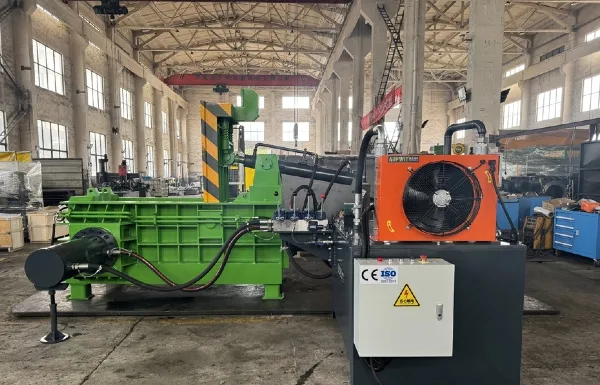
Automatic scrap metal baler lines are widely used in metal recycling centers, steel mills, aluminum processing plants, automotive dismantling facilities, and industrial manufacturing sites. They are particularly suitable for operations handling large volumes of scrap on a daily basis.
As recycling standards and environmental requirements continue to rise, fully automated baler lines are becoming a standard configuration rather than a premium option.
Choosing the right baler line requires careful analysis of material type, daily processing capacity, available space, and future expansion plans. Equipment reliability, automation level, and after-sales support are also critical factors.
Working with an experienced manufacturer of metal baling equipment ensures that the system is tailored to real production conditions, rather than relying on a generic configuration.
Automatic scrap metal baler lines represent a significant step forward in metal recycling technology. From conveyor feeding to automatic bale ejection, each component works together to deliver higher efficiency, improved safety, and consistent output quality.
For recycling plants and metal processors seeking long-term competitiveness, investing in a well-designed automatic scrap metal baler line is not only a practical decision, but a strategic one.