Aluminium China 2026
3 July, 2026


The global increase in vehicle ownership has led to a steady rise in the number of end-of-life tires generated each year. Scrap tires present unique environmental and logistical challenges due to their large volume, durability, and resistance to natural degradation. When improperly handled, waste tires can become breeding grounds for pests, create fire hazards, and occupy valuable landfill space.
To address these challenges, modern recycling facilities and waste management operations rely on specialized equipment to improve efficiency, reduce transportation costs, and prepare tires for downstream recycling processes. Among these solutions, tire baler machines play a critical role. By compressing loose tires into dense, manageable bales, tire balers help streamline scrap tire processing and support more sustainable rubber recycling practices.
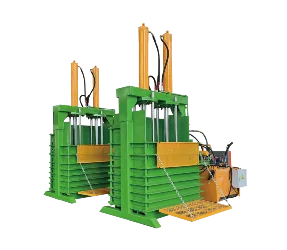
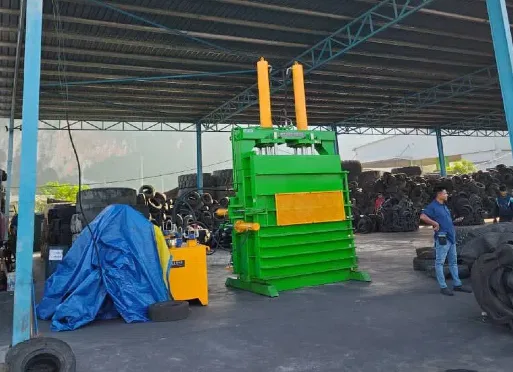
A tire baler machine is an industrial compression system designed specifically to compact scrap tires into uniform, high-density bales. These machines use powerful hydraulic systems to apply controlled pressure, reducing the volume of tires by a significant margin. The resulting bales are typically secured with steel wire or strapping to maintain their shape during storage and transportation.
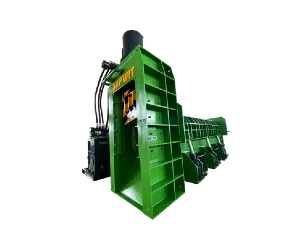
Tire balers are available in various configurations, including vertical balers, horizontal automatic balers, and heavy-duty two-ram balers. The choice of machine depends on factors such as processing capacity, tire size range, automation requirements, and available floor space. Regardless of type, the primary objective remains the same: to improve handling efficiency and prepare tires for the next stage of processing.
One of the most important applications of tire baler machines is in scrap tire collection centers and transfer stations. Loose tires are bulky and difficult to stack, making storage and transport inefficient. By compacting tires into dense bales, facilities can dramatically increase the number of tires that fit into a truck or container.
This improved density directly translates into lower transportation costs and reduced fuel consumption. Fewer truckloads are required to move the same volume of scrap tires, which not only saves money but also lowers carbon emissions associated with logistics. For regional and cross-border tire recycling operations, tire balers are often essential for maintaining cost-effective supply chains.
Tire baler machines also play a supporting role in facilities that perform tire shredding and size reduction. Before tires are fed into primary shredders, they are often baled for organized storage and controlled feeding into the processing line. Baled tires are easier to handle with forklifts or cranes, improving safety and material flow within the plant.
In high-throughput operations, consistent bale size and density help ensure a steady and predictable input rate for shredders. This contributes to more stable machine performance, reduced downtime, and better overall productivity. In this way, tire balers indirectly support the efficiency and reliability of downstream mechanical processing systems.
Crumb rubber and rubber powder production is one of the most important end uses of recycled tires. These materials are widely used in applications such as playground surfaces, athletic tracks, rubberized asphalt, molded rubber products, and industrial floor mats.
Tire balers support this process by enabling centralized collection and bulk transport of scrap tires to specialized rubber recycling plants. By delivering dense, well-secured bales, recycling facilities can maintain a stable feedstock supply and reduce material handling complexity. This contributes to more consistent production schedules and better utilization of shredders, granulators, and milling equipment used in crumb rubber processing.
Another significant application of scrap tires is tire-derived fuel (TDF), which is commonly used in cement kilns, paper mills, and industrial boilers. Tires have a high calorific value, making them an effective alternative fuel source when processed and handled correctly.
Tire baler machines are often used to prepare tires for transport to TDF users. Baled tires are easier to store in bulk and can be safely staged at fuel preparation facilities. In some cases, baled tires are further processed into chips or shreds before being fed into combustion systems. The baling step helps ensure safe handling and organized material flow prior to energy recovery.
Regulatory pressure and environmental policies in many regions require waste generators and municipalities to divert tires from landfills. Tire baler machines help support compliance with these regulations by making it economically viable to transport scrap tires to approved recycling or recovery facilities.
By reducing volume and improving logistics efficiency, tire balers lower the overall cost of proper tire disposal. This encourages higher recycling rates and reduces the likelihood of illegal dumping. In this way, tire baler machines contribute not only to operational efficiency but also to broader environmental protection and public health goals.
Loose scrap tires can create cluttered work areas, increase trip hazards, and complicate material handling. Tire baler machines help improve workplace safety by converting scattered tires into neat, stackable bales. This leads to cleaner facility layouts and more predictable material storage zones.
Baled tires are easier to move using forklifts or pallet handling equipment, reducing the need for manual lifting and handling. This lowers the risk of worker injuries and supports better ergonomics. For facilities focused on safety compliance and operational best practices, tire balers are an important part of overall plant organization.
From a business perspective, tire baler machines offer strong return on investment. Reduced transportation costs, improved storage efficiency, and streamlined material handling all contribute to lower operating expenses. At the same time, better-organized material flow can increase throughput and allow facilities to process higher volumes of scrap tires.
In addition, some recycling operations generate revenue by selling baled tires to downstream processors, fuel users, or export markets. High-density, uniform bales are often more attractive to buyers because they simplify unloading and storage at the receiving facility. This can improve marketability and pricing for scrap tire materials.
Modern tire recycling plants increasingly rely on automated systems to maximize efficiency and reduce labor costs. Tire baler machines can be integrated into these automated lines, with conveyor feeding, automatic bale tying, and remote monitoring features.
Automation improves consistency in bale size and density, which is especially important for large-scale operations serving multiple downstream customers. Integrated systems also support data tracking, allowing operators to monitor bale counts, throughput rates, and machine performance. This data-driven approach helps optimize production planning and preventive maintenance strategies.
As sustainability requirements continue to tighten and recycling technologies advance, tire baler machines are expected to become even more important in the scrap tire industry. Future developments may include higher energy efficiency, smarter control systems, and improved compatibility with fully automated recycling plants.
At the same time, growing demand for recycled rubber products and alternative fuels will place increased pressure on scrap tire collection and processing infrastructure. Tire balers will remain a foundational piece of equipment, helping bridge the gap between tire generation sources and advanced recycling or recovery facilities.
Tire baler machines play a vital role in modern scrap tire processing and rubber recycling operations. By reducing volume, improving logistics, supporting downstream processing, and enhancing workplace safety, they contribute to both economic efficiency and environmental sustainability.
From collection centers and shredding plants to crumb rubber producers and tire-derived fuel users, tire balers serve as a key link in the scrap tire value chain. As the global focus on circular economy practices and waste reduction continues to grow, tire baler machines will remain an essential technology for responsible and efficient tire recycling.